HVAC Maintenance Agreements And Customer Lifetime Value
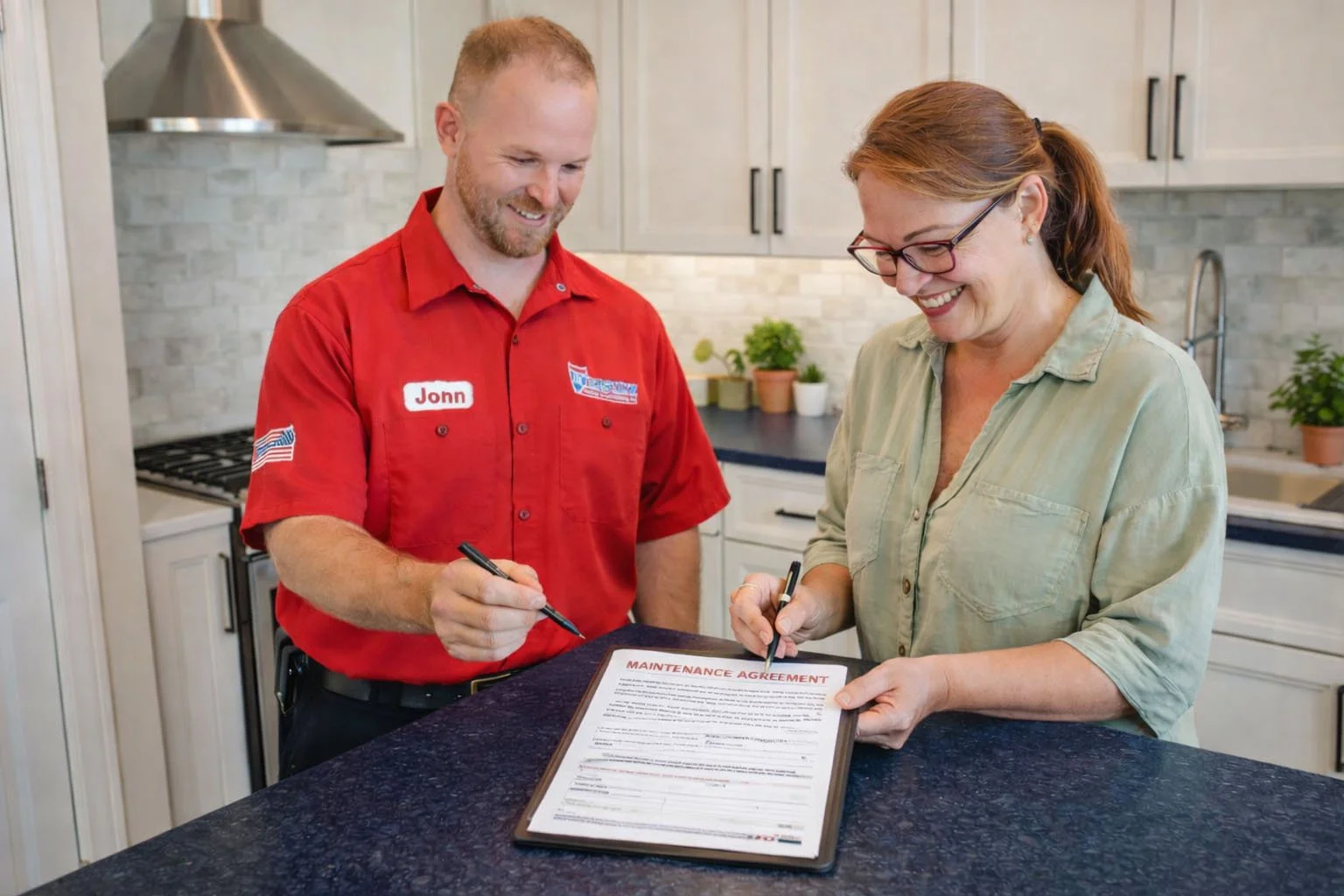
Many HVAC business owners treat maintenance plans as a “nice extra” instead of what they really are: the engine that turns one‑time jobs into long‑term, high‑value customer relationships.
HVAC benchmarks estimate the average customer lifetime value at roughly; $15,340 per residential client. This is driven by repeat service, maintenance, and replacement work over time.
Yet, most HVAC contractors never calculate customers this way.
The typical mindset in the trades is job-based.
A call comes in, work gets completed, payment is collected, and attention shifts to the next dispatch.
Yet the economics of the HVAC business operate on an entirely different timeline.
Heating and cooling systems require ongoing care
Parts fail predictably
Efficiency declines with age
Full system replacement is unavoidable
The financial value of a customer is therefore not defined by the first invoice, but by how long that homeowner continues to rely on your company.
This distinction matters far more than many HVAC owners realize. Customer lifetime value is not a marketing concept.
It is a revenue reality built directly into how HVAC equipment behaves.
A homeowner who stays connected to your business for ten or fifteen years will generate dramatically more revenue than a homeowner who calls once and disappears.
The difference between those two outcomes comes down to whether the contractor intentionally builds retention processes into the business.
Maintenance plans sit at the center of this dynamic.
Table of Content
HVAC Maintenance Agreements And Customer Lifetime Value
Customer lifetime value is the total net profit you expect to earn from a customer over the full lifetime of the relationship, not just one job.
In HVAC, that relationship can hopefully span years of tune‑ups, repairs, indoor air quality upgrades, and full‑system replacements.
This is why lifetime value is so much higher than a single repair ticket.
When you operate without maintenance plans, you collect revenue from a prospective customer when something breaks or when their system must be replaced.
You are left with long gaps in contact and no revenue.
Maintenance agreements change that rhythm by adding predictable, recurring revenue and scheduled contact points that keep you in front of the customer year‑round.
Industry analysis of HVAC services shows that recurring service agreements and contracts now capture more than half of total service revenue, 55% of industry revenue. That segment is growing faster than one‑off jobs.
The industry has realized that service agreement programs are a core part of future‑proofing an HVAC company.
It helps the business owner stabilize cash flow, smooth out seasonality, and provide a platform for additional services and upgrades over time.

Why Maintenance Customers Are Worth More Over Time
Maintenance plan customers are more valuable than one‑time buyers because they stay longer, buy more often, and are more likely to choose you for big‑ticket work.
Multiple retention studies and marketing benchmarks summarize that it costs roughly 5-7x more to acquire a new customer than to keep an existing one.
HVAC marketing sources apply that same rule of thumb to dealers and contractors.
That means every time you sign up a hard-won HVAC customer into a well-run maintenance agreement, you are stretching that expensive acquisition cost across years of tune-ups and repairs.
You are also spreading it over future upgrades and eventual replacements instead of a single one-time ticket.
Recurring Revenue And Predictable Cash Flow
Maintenance plans raise customer lifetime value partly by generating subscription‑like recurring revenue that continues even when the weather is mild and emergency demand is low.
Service agreement programs that bill monthly or annually provide a base of predictable income the company can rely on for overhead and staffing, reducing the risk of severe cash‑flow swings.
Guidance for home‑service businesses often says this more simply.
Maintenance plans help turn more of your revenue into steady, predictable money each month.
Recurring revenue also changes your marketing math.
Instead of needing every new customer to be profitable on the first ticket, companies with strong maintenance plans think longer term.
They can afford to spend more to acquire the right customers because they know each contract will generate revenue each year as long as it is renewed.
This higher allowable acquisition cost lets them compete more aggressively in the market while still earning strong lifetime returns on each new account, thereby pushing customer lifetime value higher.

Renewal And Retention As The Lifetime Value Lever
Customer lifetime value depends heavily on how long customers stay with you.
Therefore, renewal and retention are the main levers for getting real value from maintenance plans.
Keeping a plan customer is far cheaper than finding a brand new one.
When a maintenance plan is canceled, you lose the monthly fee, the future repair and replacement work that would have come with it.
Well-run maintenance programs can achieve very high renewal rates, and even a small increase in renewal rates can generate significant extra lifetime revenue across a large membership base.
From a lifetime value standpoint, the real work starts after you sell the plan.
Companies that build simple, steady renewal systems get far more long-term value from each customer.
They use clear communication to show value during the year.
They stay in touch between visits with:
A monthly email newsletter
Sending occasional helpful texts, such as seasonal tips or filter reminders
They do periodic check-in calls to active members.
The bottom line is that if you want high renewal rates and strong lifetime value, you cannot go silent once the customer signs up.
These are your customers. Treat them with respect and keep sending useful, relevant communication, and they will stay with you for a very long time.
Key Takeaways
HVAC maintenance plans increase customer lifetime value by keeping customers on a recurring schedule of tune‑ups, repairs, and upgrades instead of relying on one‑off emergency calls.
Service agreement programs that include structured follow‑up can significantly raise customer lifetime value while also reducing the effective cost of acquiring each customer, because customers buy more often and stay longer.
Recurring revenue from HVAC maintenance plans stabilizes cash flow, makes slow seasons less painful, and lets you invest more confidently in marketing, staffing, and training.
High renewal rates for maintenance agreements are the main lever for increasing customer lifetime value, as each renewal adds more years of fees, repairs, and replacement opportunities.
Frequently Asked Questions
What is customer lifetime value in an HVAC business?
Customer lifetime value is the total profit you expect to earn from a customer over the entire relationship, including maintenance visits, repairs, upgrades, and system replacements. In HVAC, recent benchmarking analysis estimates average customer lifetime value at around 15,340 dollars per residential client because most customers need repeated service and at least one full replacement over many years.
How do HVAC maintenance plans increase customer lifetime value?
HVAC maintenance plans increase customer lifetime value by keeping customers on recurring visits, which improves retention and creates more opportunities to sell additional work. Home‑service businesses that add structured maintenance agreements and follow‑up systems consistently see higher lifetime value because customers buy more often and stay with the company longer.
Do HVAC maintenance plans really improve revenue stability?
Yes. HVAC maintenance agreements generate subscription‑like recurring revenue that continues even when emergency demand is low, stabilizing cash flow and reducing dependence on weather‑driven spikes. Mature home‑service businesses with strong maintenance programs often derive a large share of their revenue from recurring sources, supporting higher margins and more predictable growth.
Why are maintenance plan renewals so important?
Maintenance plan renewals extend the length of the customer relationship, adding more years of recurring fees, repairs, and upgrade opportunities, which directly increases customer lifetime value. Losing a maintenance agreement removes the contract income and the associated pull‑through work, so improving renewal rates has an outsized impact on long‑term revenue and profit.
Stop Giving Away Profit Inside Your Maintenance Agreements
If your maintenance customers look loyal on paper but your bottom line doesn’t show it, your plans are underperforming.
Learn the right strategies for pricing, delivery, and renewals that can turn those agreements from “busy work” into a reliable profit engine.
That’s exactly the work I do with HVAC owners who are done guessing and ready to see maintenance plans pay off.
Sign up for your complimentary 20-Minute strategy session below.
Coach Ellie is a 25+ year award-winning, certified business and executive coach helping HVAC, plumbing, and electric business owners across the Northeast, Mid-Atlantic, and nationwide scale profits, strengthen leadership, and streamline operations through no-fluff strategies that actually work.
See other related blogs